Early Years to Primary transition support
WTT are commissioned to empower and support mainstream primary settings in meeting the needs of their autistic children and those who have social communication differences, and therefore it is WTT’’s role to support a successful transition, working alongside the Early years setting/childcare provider, mainstream primary, parents/carers and any other agencies who may be involved to identify what needs to be in place within the school environment and day in order for the child to succeed. Our role is to help the school be ready to meet the pupils need in Reception through supporting the transition.
The process for accessing WTT Early years to primary transition support for autistic children/ those with social communication differences works through an online form and should be utilised for the summer term before the pupil is due to start school- you can start after Easter once the pupil's primary placement has been allocated.
We have an Online Ladder helpline which runs every Friday morning 8:30am-1pm during term time as a drop in and is for all Ladder process queries. You can receive the link by emailing outreach@gosberton-house.lincs.sch.uk outreach@gosberton-house.lincs.sch.uk
We have added some key tools below to support the Early years to primary transition process.
My Senses
Should be used to give an overview of the child's sensory preferences and dislikes so it can be easily shared with new adults
One Page Profile
An overview of the child's strengths, differences and support needs. This is one format, there are lots out there. https://www.sheffkids.co.uk/resources/ has lots of different backgrounds so you can personalise to the child's interests. They should updated regularly.
Communication Passport
A really useful tool to share what you have learned about a child's communication so that new adults can become familiar more quickly and reduce frustration for the child. You can use for both children with or without verbal language.
Setting Transition tool for Early Years (AET format)
This tool will run alongside the new AET Transitions module and provides a thorough plan for transition to a new setting, which can be personalised for an individual child.
Adult communication audit
To be an autism inclusive setting, we need to look at our own communication with our children. This communication audit asks staff to explore their teams and identify good practice as well as areas that need action.
Progression Framework
Transition assessment tool- As part of the Transition ladder, we ask you to identify one are of the framework to baseline an assessment. This helps the receiving setting to know what skills to expect in that area and then check for these following transition and identify any areas which may need re-teaching in the new environment before moving on to next steps. We advise that you just start with one area, perhaps adding others over time as necessary.
Environmental checklist (AET format)
A slightly adapted version of the AET tool which looks at the sensory environment of your setting or a room within the setting and asks you to explore sensory statements which could support autistic children inclusion.
Positive sensory profile
WTT's sensory tool which takes you through the process of identifying sensory behaviours and looking at strategies for support.
Points to note:
- It is not WTT’s role to mediate communication between settings/provisions-this should be happening prior to requesting additional support.
- It is not WTT’s role to contribute towards EHCP Needs Assessments by the Early years setting. The setting should be accessing their appropriate support services.
- Completing this WTT transition ladder step starts engagement with WTT support. Primarily, that support is through feedback and advice on the transition Ladder.
- The pupil should be on the settings SEN register.
- Having needs within autism/social communication differences does not mean a setting must initiate the ladder. The setting should be addressing individual differences through their graduated approach e.g. use of a One-Page profile, accessing training to upskill the setting staff, ensuring individual targets address social communication differences and document how adults will support and adapt their practice to address those.
Early Years to Primary Transition Support Form 2026
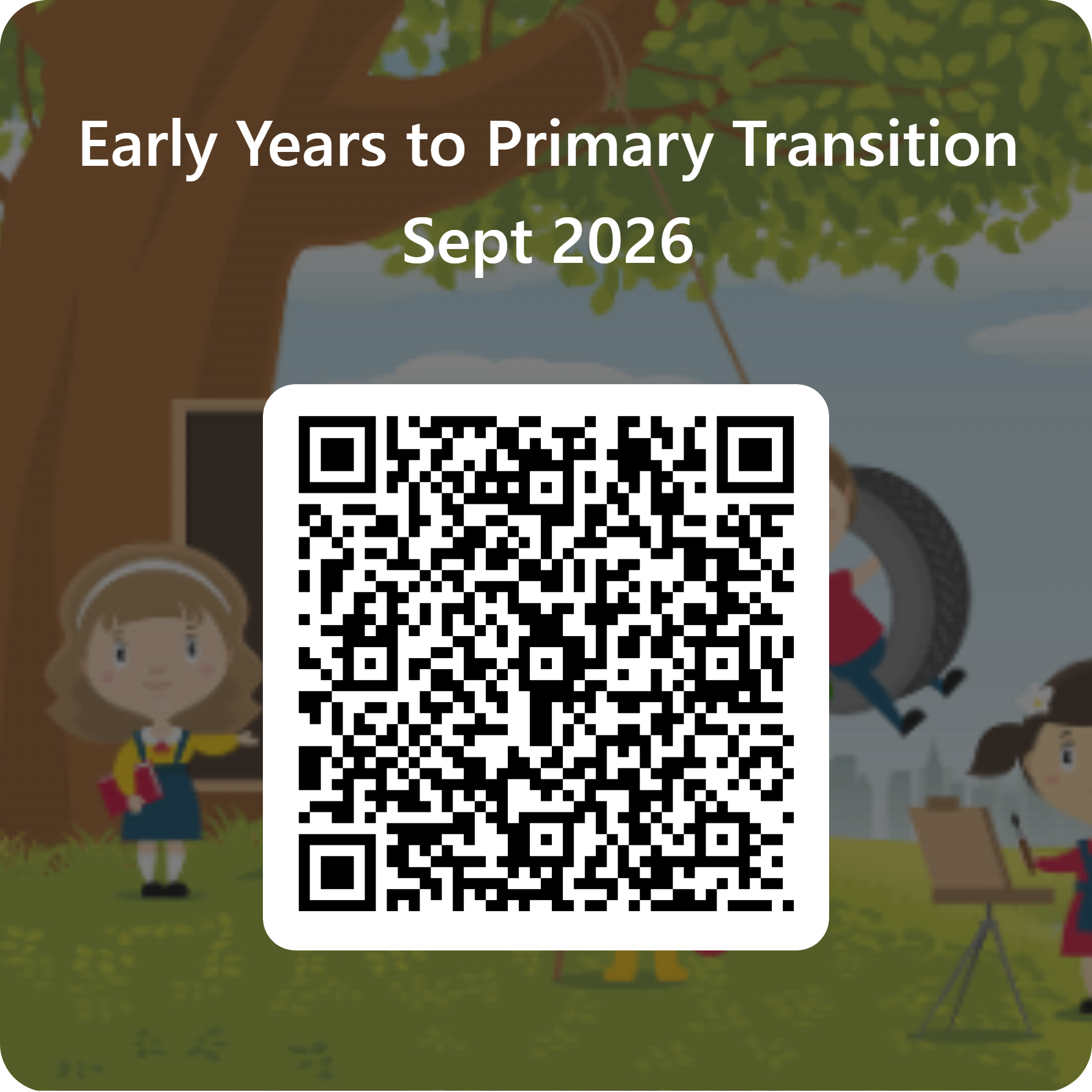
This form is open to responses from 16th April to 30th June 2026 and can be completed by pre-school settings, childminders or EY SEND effectiveness advisors where a child is starting mainstream maintained primary school in Lincolnshire in September 2026 and has differences in their social communication and/or autism.
Scan the QR code below or click the link.